

Marble
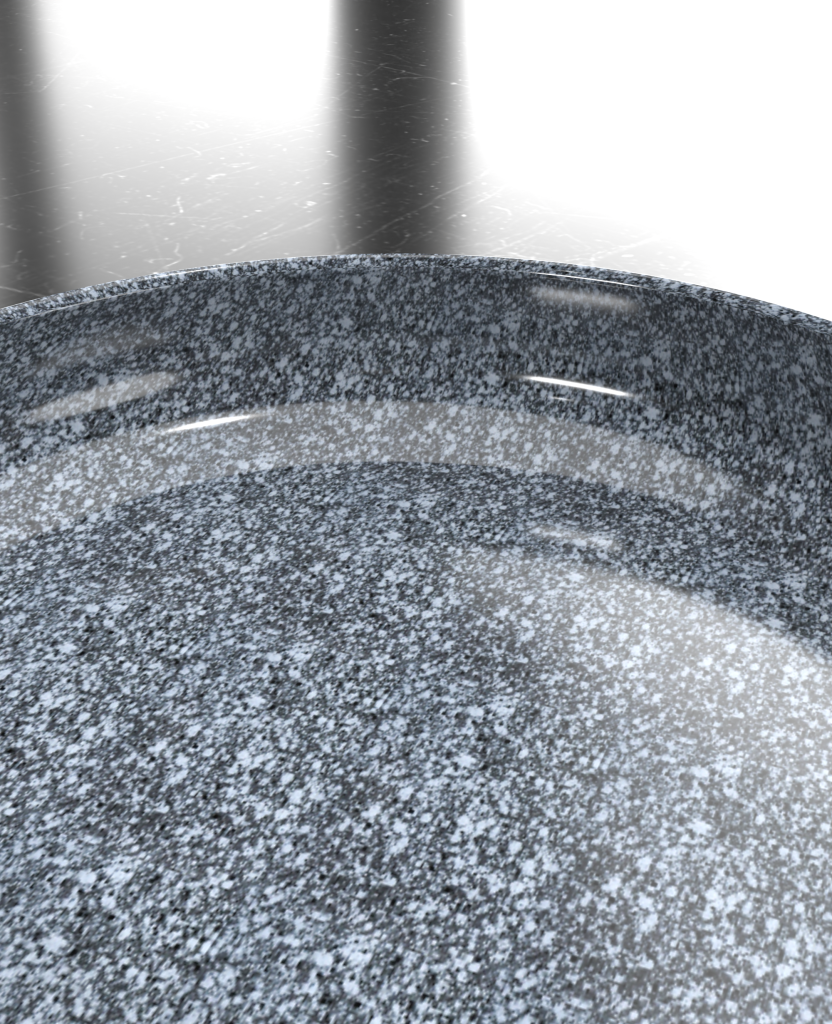
The Marble series takes the natural veining of marble as its design inspiration. Through a precise color dot matching process, it creates a naturally varied dotted texture on the coating surface—like replicating the delicate patterns of Carrara white marble on cookware. It combines the premium feel of stone with the gentle warmth of ceramics, transforming everyday cookware into works of art. In frying, sautéing, and cooking, it showcases the unique beauty of natural stone, adding a light luxury and naturalist touch to the kitchen space.
- Bionic marble texture
- Zero-fluoride safety base
- Reinforced non-stick matrix
- Multicolor Stone Replica
Properties & performance profile
Structure
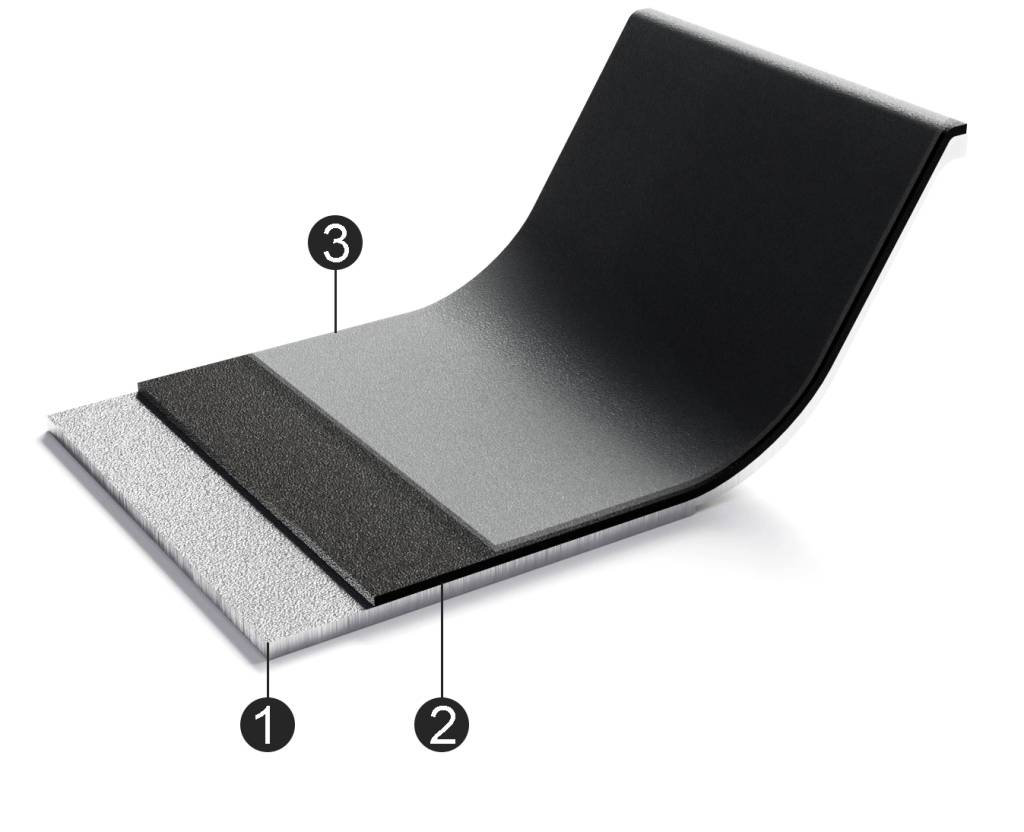
Marble is a universal, two-coat water-based non-stick system. To its good performance and practical non-stick effect, the system is particularly suitable for everyday, simple daily use at home.
- ① The metal substrate is sandblasted to ensure the coating has optimal adhesion to the cookware.
- ② Primer with very good adhesion to the substrate
- ③ Robust top coat sealing for a long-lasting non-stick effect
Security and authentication
TEBANG cooperates with internationally renowned testing institutions (SGS) to ensure that products and services comply with global standards and local regulations. We can demonstrate to you or your end users that the Colorful series products meet both domestic and international standards and specifications.





Test methods
Performance test
Abrasion resistance
Test method: Use an abrasion tester with a 500g load and 3M 7447B scouring pad (simulating a spatula/steel wool), and record the number of friction cycles.
Qualification Requirements: High-quality coatings must withstand ≥10,000 rubs without exposing the substrate, and after rubbing, the fried egg test should show no significant sticking.
Adhesion test
Test method: Cross-cut test – Use a blade to cut a 1×1mm grid, then observe the area of peeling after removing 3M tape; or perform a bending test (180° bend).
Qualification Requirements: Cross-cut adhesion test area ≤5% (ISO 2409 grade 0/1), no cracking or peeling after bending.
Thermal shock resistance
Test method: Thermal shock test – after maintaining a high temperature of 250℃, rapidly cool to -20℃, repeating the cycle 50-100 times.
Qualification Requirements: The coating has no cracks, blisters, or peeling.
Chemical resistance
Test method: Soak test: Soak in 4% acetic acid (simulating vinegar), 3% sodium carbonate (simulating alkali), and ethanol (simulating oil) at 80°C for 6 hours..
Qualification Requirements: The coating shows no corrosion, discoloration, or softening.
Non-stick test
Test method: Fried egg test (observe the degree of sticking after frying an egg without oil) or boiled water test (water droplets form beads and roll, contact angle ≥ 90°).
Qualification Requirements: Residue on ingredients ≤0.1g/dm², easy-to-clean rating ≥8/10.
Safety inspection
Heavy metal migration
Test method: ICP-MS testing – after soaking in 4% acetic acid, measure the content of lead, cadmium, arsenic, etc.
Qualification Requirements: Lead/Cadmium ≤ 0.01 mg/dm², Arsenic/Mercury not detected.
Total migration
Test method: Simulated liquid immersion – boil in 4% acetic acid (acidic) or 95% ethanol (oily) for 0.5 hours, then let stand at room temperature for 24 hours, and measure the total amount of dissolved substances.
Qualification Requirements: ≤10 mg/dm² (total of all non-volatile substances).
Perfluorinated compounds (PFAS)
Test method: GC-MS/LC-MS Testing – For PTFE coatings, screening for prohibited substances such as PFOA and PFOS.
Qualification Requirements: Must not be detected (EU REACH requirement ≤0.01 μg/dm²).
Volatile organic compounds (VOCs)
Test method: Headspace GC testing – measures the content of volatile substances in coatings.
Qualification Requirements: ≤50 μg/g (to avoid odor or harmful gas release).
